Everything for Editors
Scheduling & Archiving Content
Scheduling: For later publishing
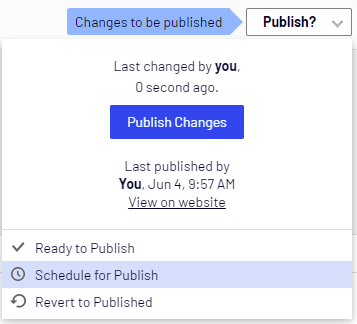
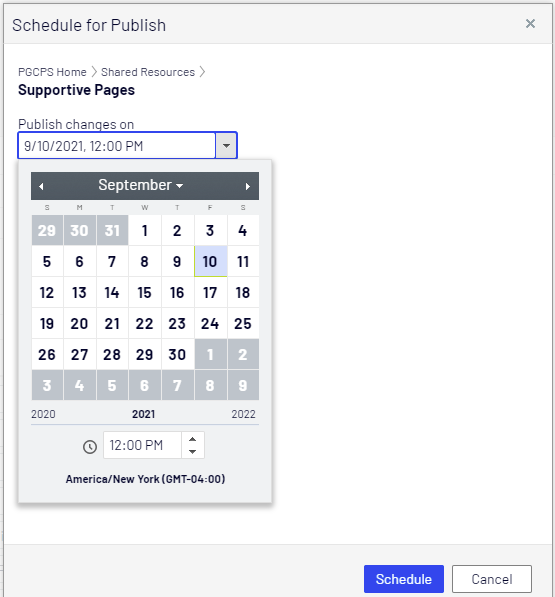
If you have publishing access rights, you can schedule the publishing to occur at a later occasion. Select the Schedule for Publish option, and set the date and time when you want the content (new or updated) to be published. This applies to both newly created content, and changes to existing content.
Scheduling: Project Items
Content items marked as Ready to Publish can be scheduled.
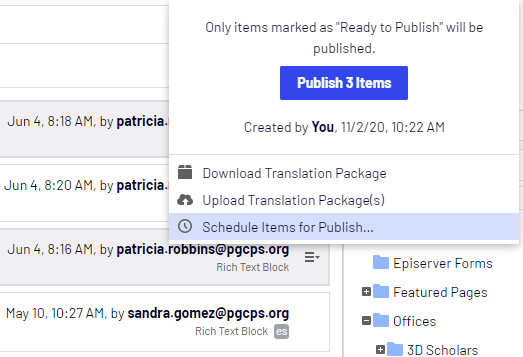
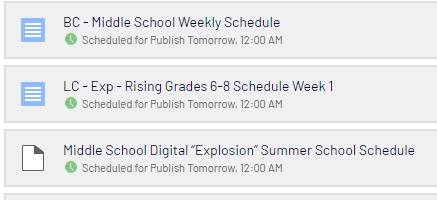
You must 1st select the item context menu and set it as Ready to Publish. Common computer mouse and keyboard functionality for selecting multiple items is supported, except for CTRL+A which is not supported. Next, set the date and time when you want the content (new or updated) to be published.
Note: If you're working in a project that has approvals setup, you can only schedule content to publish after your content has been reviewed & approved. Because comments are required, we ask our editors to note the time/date you expect the content to be published. This collaboration with our translations team is critical in keeping our Spanish PGCPS site up-to-date.
Remove scheduling and create new drafts
Content that is scheduled for publishing, is locked for editing. Select the Remove Scheduling and Edit option to interrupt the scheduled publishing and continue editing the selected version.
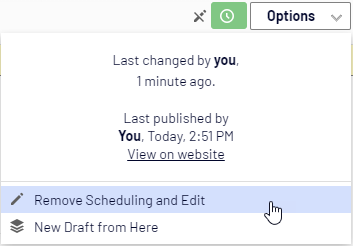
Selecting New Draft from Here creates a new draft, based on the scheduled version, which is still published at the scheduled time. You can continue working on the new draft, and apply publishing actions for this, as desired. An advanced scenario would be to apply multiple publishing occasions for different versions of a campaign page, having them replace each other in a desired order.
Expiring and Archiving
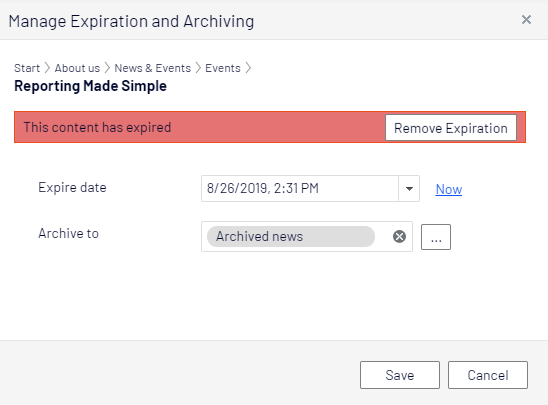
Normally, web content never expires, but you can set pages and blocks to expire at a certain time in the future or immediately. Expired content is not displayed on the website but remains in Optimizely CMS. You can remove the expiration from the content to make it appear on the website again.
Note: The expiration sets a stop publish date on the content and this date applies to all versions of the content. For example, if you set a page to expire and then create a draft from the latest published version and publish that draft, it will still be expired and not displayed on the website. You must manually remove the expiration for the page to be public.
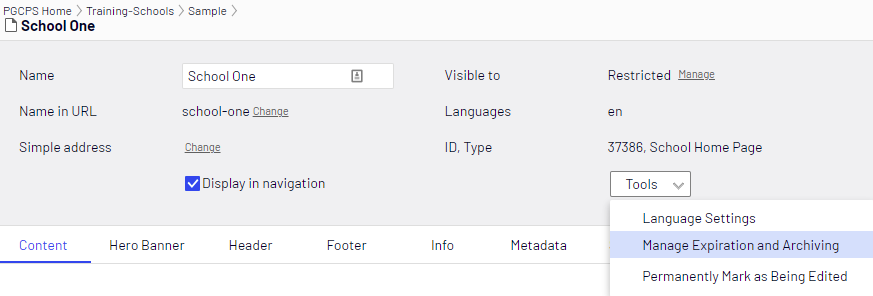
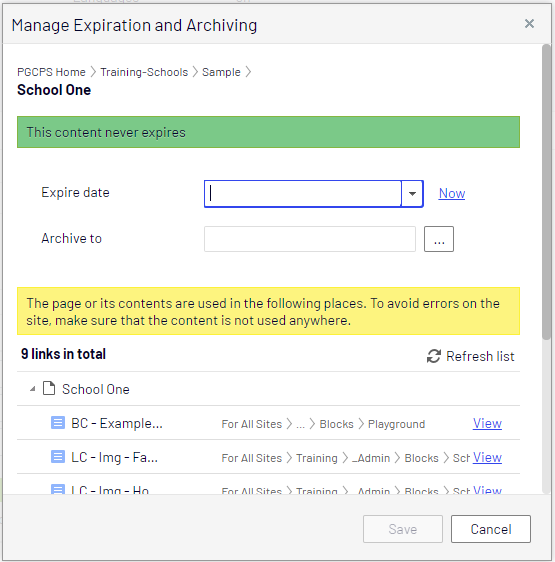
Setting an expiration time is done in the All Properties editing view by selecting Tools > Manage Expiration and Archiving. Select Now if you want expiration to apply immediately.
Archiving of expired content
Optimizely has a built-in archiving feature where pages with a set stop publish time are automatically moved to a defined archive branch when the time has passed. This is useful when you have news pages in a listing where you want to remove old news from the listing, but still keep the pages in an archive. Note: the expiration date is removed when the items are moved to the archive.
Archiving expired content is done in the Manage Expiration and Archiving dialog box by selecting the page branch to which you want to move the expired page.